Process Safety2026-08-12T18:46:33+00:00

Process Safety

Your Partner for Customized Safety Solutions to Create a Safe, Secure, and Compliant Facility.

Process Safety
A Safety Culture

We can provide a roadmap for improvement to reduce risk and ensure compliance

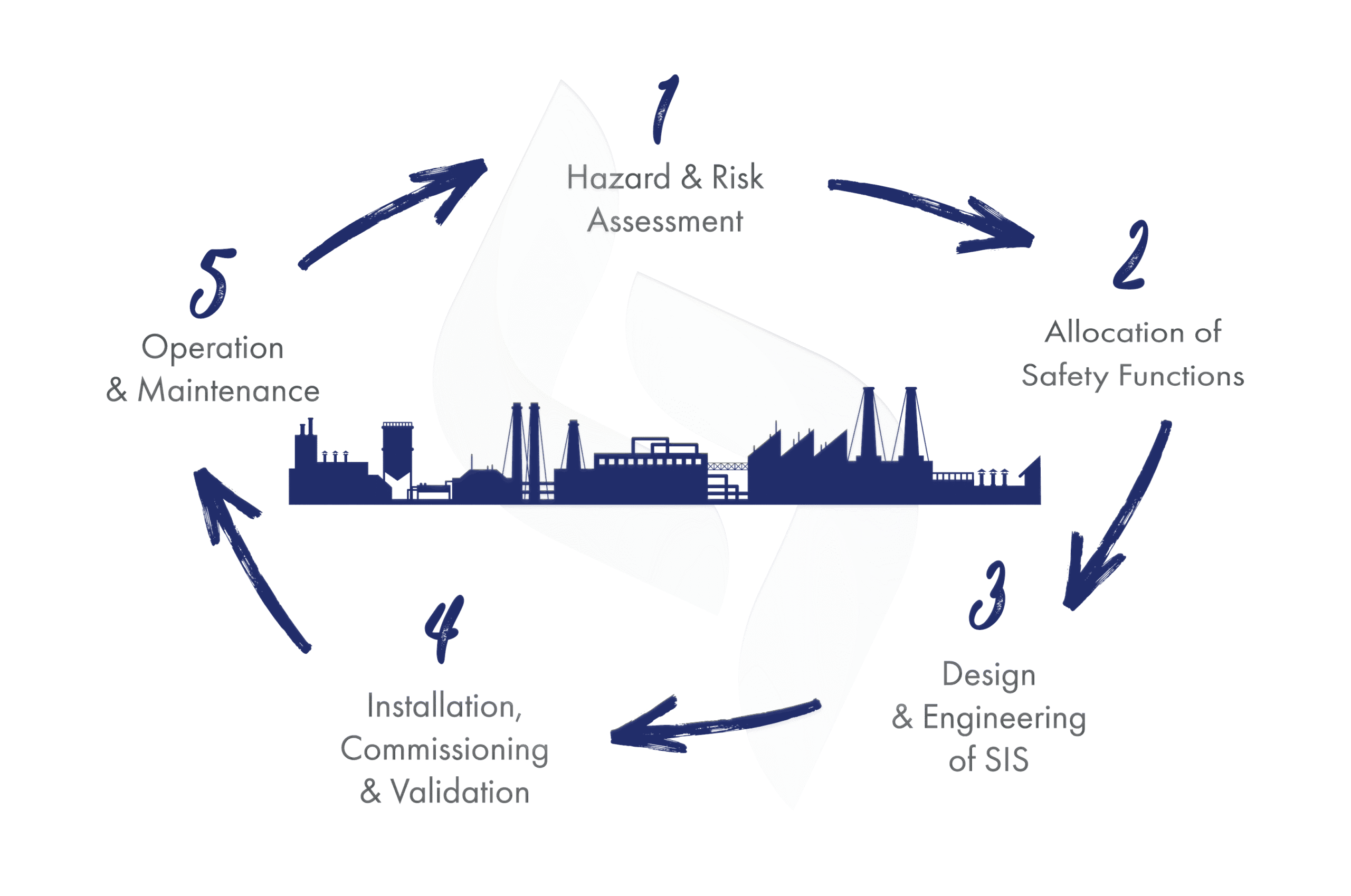
The Process Safety Lifecycle

Process Safety Lifecycle

PHA Screening Checklist

Is your Team initiating a PHA? Download this checklist to ensure you have the essential requirements in place.

Process Safety Lifecycle Capabilities

Industrial environments pose unique risks to the safety and wellbeing of employees and the surrounding community and environment. Safety Instrumented Systems (SIS) play an essential role in providing a protective layer around industrial process systems. Its purpose is to identify a specific hazard when pre-determined set points are breached and take the process back to a “safe-state.”

Hargrove provides the full range of SIS design and implementation services. From building new systems, studying legacy systems, and recommending the most impactful safety changes, our Team can help ensure your facility meets regulatory requirements and adheres to the latest industry best practices.

Hargrove performs hazard and operability studies (HAZOP) and layers of protection analyses (LOPA), participates in design reviews, calculates probability of failure on demand (PFD), performs criticality analyses, and tests on new systems. We help our clients design, install, and maintain “failsafe” control systems for the full Safety Instrumented Function (SIF) – logic, actuators, sensors, and other control equipment independent of your basic process control system to ensure SIS functionality is not compromised

Process Safety Engineers

Our Team is experienced in a variety of SIS platforms

Schneider Triconex
Emerson DeltaV SIS
Yokogawa Prosafe
Siemens SIS
HIMA HIMax / HIMatrix / HIQuad
Siemens (APACS) Quadlog
Honeywell Safety Manager & FSC
Rockwell Triplex / ControlLogix & GuardLogix

SIS Cybersecurity

As cyber threats continue to evolve, the integrity and reliability of your facility’s systems can be compromised, potentially leading
to hazardous events, operational disruptions, or loss of intellectual property.

Our Team can help you minimize the likelihood of unauthorized changes to SIS logic, prevent the interruption of service, and protect intellectual property. Learn more about Hargrove’s OT Cybersecurity Assessment of your SIS.

SIS Engineer

Where We Focus

  • HAZOP/PHA Studies
  • LOPA (Layers of Protection Analysis)
  • Safety Integrity Level (SIL) Calculations
  • SIF/SIL Selection
  • Safety Requirements Specifications (SRS) Documentation
  • Evaluation of New or Existing Installs
  • Instrument and Final Element Selection
  • Standard Compliance Evaluations
  • SIS Programming
  • Panel Fabrication
  • Proof Testing and Validation
  • SIS/DCS Integration
  • Burner Management Systems (BMS)
  • Maintenance and Testing Procedure

Watch the Webinar: “Layers of Protection in Process Safety Management”

Hosted by Chet Barton, Hargrove’s Process Safety Group Leader

Run Your Plant With Confidence

Request a Consultation
Execute Customized Solutions
Experience Sustainable Results

Safety Compliance

The General Duty Clause section 5(a)(1) of the Occupational Safety and Health Administration (OSHA) act requires all employers to provide a workplace free from recognized hazards that cause or are likely to cause death or serious injury. This general statement of responsibility is imperative for OSHA compliance yet new and changing safety standards leave how to satisfy the specific requirements ambiguous, especially for the industrial process industries.

Establishing a Process Safety Management (PSM) program for compliance requires qualified experts in OSHA recognized international safety standards including IEC 61508, IEC 61511 / ISA 84, and IEC 62061. Beyond instituting a PSM program, maintaining and testing safety systems and practices should be an ongoing process to ensure that the safety processes and systems function as intended over their operational life.

Process Safety Compliance

Process Safety Management

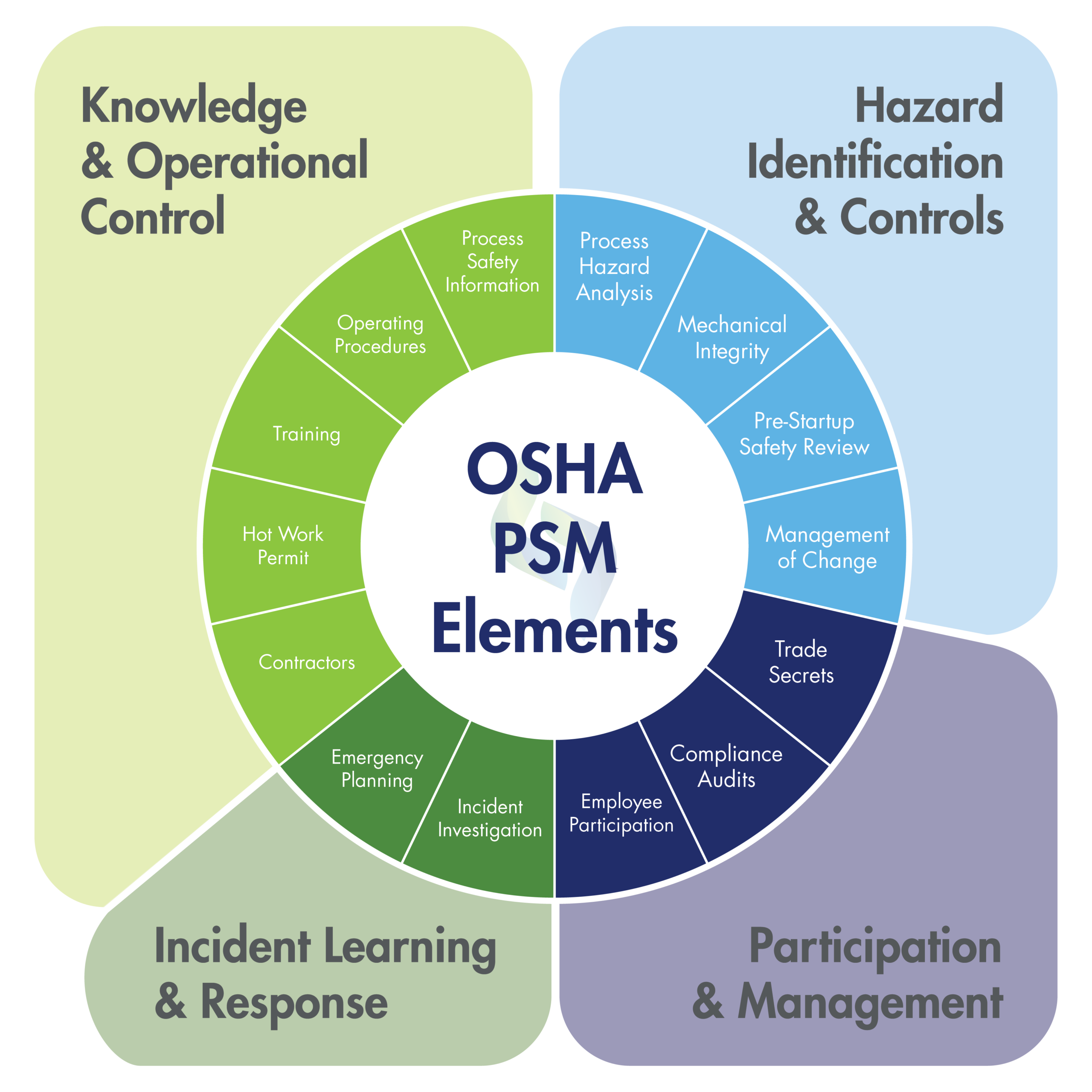
PSM Elements
Roadmap to Compliance

Learn how we can partner with you to achieve full OSHA PSM compliance for a safe, secure and compliant facility.

14 PSM Elements
Process Safety Training

Process Safety Training

Process Safety for the Non-Process Safety Engineer: This training explains the concept behind process safety for someone who does not understand. It explains Layers of Protection and the ramifications of making changes or missing maintenance.

Common SIS Misconceptions

Maneuver through the process safety life-cycle. Learn about the common SIS misconceptions in the process industry.

Process Safety Frequently Asked Questions (FAQs)

What is process safety?2026-08-12T18:07:31+00:00

Process safety focuses on preventing, mitigating, and learning from unplanned releases of hazardous energy or materials. In industrial facilities, Safety Instrumented Systems (SIS) are often a key layer of protection—designed to detect predefined unsafe conditions and automatically drive a process to a safe state when setpoints are exceeded.

What is Process Safety Management (PSM), and when does it apply?2026-08-12T18:09:12+00:00

PSM is a management framework used to control hazards associated with highly hazardous chemicals and complex industrial processes. In the U.S., many facilities follow OSHA’s Process Safety Management standard (29 CFR 1910.119) along with recognized and generally accepted good engineering practice (RAGAGEP). PSM is not a one-time effort—it requires ongoing implementation, verification, and continuous improvement throughout the life of a process.

What is a Safety Instrumented System (SIS), and how is it different from the basic control system?2026-08-12T18:10:05+00:00

An SIS is an independent protective layer that performs one or more Safety Instrumented Functions (SIFs) to reduce risk. A typical SIF includes sensors, logic solving, and final elements (such as shutdown valves) designed to take the process to a safe state. SIS design is intentionally independent of the Basic Process Control System (BPCS) so the protection remains effective even if the control layer is compromised.

What is a Process Hazard Analysis (PHA), and when should we do one?2026-08-12T18:10:47+00:00

In IEC 61511’s safety lifecycle, risk assessment is a foundational early step. A PHA, required by OSHA 1910.119, is part of the first stage of the safety lifecycle and is a structured method for identifying process hazards, understanding risk, and defining safeguards. HAZOP (Hazard and Operability Study) is one of the most common PHA techniques but other methods include Checklists, What-Ifs, HazIDs, and LOPAs. (Layers of Protection Analysis). PHAs are typically performed for new projects, major modifications (management of change), and legacy systems—then revalidated every five (5) years to confirm safeguards still match real plant conditions.

What is LOPA, and how does it relate to SIL?2026-08-12T18:11:37+00:00

LOPA (Layers of Protection Analysis) is a semi-quantitative method used to evaluate whether existing safeguards reduce risk to a tolerable level. It helps teams validate the effectiveness and independence of protection layers and can be used to determine the risk reduction needed for a Safety Instrumented Function—informing SIF selection and Safety Integrity Level (SIL) targets and calculations.

What is the difference between a LOPA and a HAZOP, and how do I know which one I need for my facility?2026-08-12T18:15:57+00:00

A HAZOP is a qualitative method of defining what hazards are present in a process, the causes, how likely they are to occur, and how severe they could be (i.e. the overall risk). Protections against these scenarios are usually identified. LOPA is a semi-quantitative, closer look at those protections which will reveal shortcomings (see the section on “What is LOPA, and how does it relate to SIL?”). Normally both should be used for a complete evaluation of the process.

What are Functional Safety Assessments and when should they completed during the safety lifecycle?2026-08-12T18:16:55+00:00

FSA’s are an independent back-check to be sure that all hazardous scenarios (especially the new recommendations identified in a LOPA) are being addressed adequately and properly. There are five stages which occur throughout the Safety Lifecycle, and address different required information.

How do cybersecurity assessments support the safety lifecycle?2026-08-12T18:17:31+00:00

Cyber assessments are required by the 61511 standard. A common phrase is “if it isn’t secure it isn’t safe” because cyber incidents can be another cause of a hazardous scenario.

What industries does Hargrove support for process safety?2026-08-12T18:23:07+00:00

Our Team designs and implements safety systems for a wide range of process and industrial environments, including refining, petrochemicals, chemicals, oil & gas, and manufacturing.

How do we get started with Hargrove?2026-08-12T18:22:30+00:00

We typically start with a short scoping conversation to understand your process, constraints, and goals (risk reduction, compliance, modernization, training, etc.). From there, we can propose an assessment or workshop and provide a roadmap for improvement. Helpful starting information may include P&IDs, process safety information, prior PHA/LOPA documentation, SRS and cause-and-effect documentation, operating/proof test procedures, and SIS platform details.

Do you offer process safety training?2026-08-12T18:21:48+00:00

Yes. We offer training such as Process Safety for the Non-Process Safety Engineer, which introduces core concepts like layers of protection (LOPA) and how changes or missed maintenance can increase risk. We also provide customized PSM training and can support TÜV Rheinland certification courses facilitated by authorized providers.

Who performs the work, and what qualifications do they have?2026-08-12T18:20:56+00:00

Our process safety work is led by specialists who are trained and qualified in functional safety, including TÜV Rheinland-certified Functional Safety Engineers. The Team includes process, electrical/instrumentation, and control system professionals, and members actively participate in industry standards committees, bringing practical experience and current best practices to each engagement.

What SIS platforms does Hargrove support?2026-08-12T18:20:17+00:00

Our Specialists have experience across a range of SIS technologies, including HIMA; Schneider Triconex; Emerson DeltaV SIS; Rockwell GuardLogix; Honeywell Safety Manager and FSC; Yokogawa ProSafe; and Siemens safety platforms (including legacy systems). We also support Burner Management Systems (BMS).

Can you evaluate or improve an existing (legacy) SIS?2026-08-12T18:19:37+00:00

Yes. We can assess existing SIS implementations, identify risk and compliance gaps, and recommend practical improvements. This may include reviewing documentation (SRS and procedures), confirming field device suitability, validating proof test intervals and methods, supporting modernization or platform changes, and helping verify that safeguards perform as intended over the system’s operating life.

What process safety services does Hargrove provide?2026-08-12T18:18:59+00:00

We support the full safety lifecycle—from early risk assessment through long-term sustainment. Typical services include PHA/HAZOP and LOPA facilitation; gap analysis and SIF conceptual design; SIL calculations and Safety Requirements Specifications (SRS); SIS logic solver programming and commissioning support; periodic proof-testing procedures; Functional Safety Assessments (FSA); alarm rationalization; and customized PSM/process safety training.

What process safety standards does Hargrove support?2026-08-12T18:18:15+00:00

Our Team supports clients using commonly applied standards and requirements, including OSHA PSM (29 CFR 1910.119), IEC 61508, and IEC 61511 (ANSI/ISA 61511). Depending on the facility and scope, we also support related requirements and good practices such as applicable NFPA standards and EPA Risk Management Program (40 CFR Part 68).

Hargrove Teammates are voting members on the following committees: NFPA 85, ISO 5133 for Fired Equipment, American Technical Committee TC-56 for the IEC 61882 HAZOP Application Guide, ISA Alarm Management committee ISA 18.2, and the ISA Non-SIS IPL committee 84.91.03.

Have a question that isn’t listed here? Contact our Process Safety Team to discuss your facility, risk profile, and compliance goals.

Why Hargrove

Whether you are working on upgrading an industrial facility or building a new greenfield facility, Hargrove’s SIS Specialists and Process Hazard Analysis (PHA) facilitators will work with you to meet YOUR safety needs.

Members of our Team actively participate on safety standard committees and have a thorough understanding of industry best practices and requirements.

Several of our Team members have completed the industry’s most rigorous and comprehensive Functional Safety Training Program to earn their certification as TÜV Rheinland Functional Safety (FS) Engineers.

Our certified Functional Safety Engineers have developed a meticulous methodology for process safety, adhering to IEC 61508 / 61511, ANSI/ISA-61511-2018, and the entire Safety Life-cycle.

The Process Safety Team can design and implement safety systems in the refining, petrochemicals, chemicals, oil & gas, and manufacturing industries. The Team comprises of process design engineers, Electrical and instrumentation engineers & designers, control system engineers, and safety experts.

Process Safety

Stay Informed

Read from our blog featuring Hargrove Teammates
  • The Real Cost of Process Safety

The Real Cost of Process Safety

By Cheryl Garcia, Process Safety Technical Consultant ________________________________________ Introduction When budgets tighten, Process Safety Management (PSM) is often treated as a [...]

Newsletter sign up

Subscribe to Our Newsletter

Stay up to date on the latest Hargrove News & Insights.

Connect With Hargrove Controls & Automation

Follow us on Linkedin

Go to Top