
Batch Integration on Demand
CASE STUDY
By automating the system operations, personnel were no longer required to be positioned at the pumps. This improved the safety of personnel at the facility.
OBJECTIVE: The major chemical company needed to add a new process unit in an existing 24/7 operating plant, taking the plant’s mainly manual batch reactors, and automating them with the goal of avoiding a plant shutdown.
CHALLENGE: One of the challenges was changing recipes for new products. There were constantly new demands for different products that would require re-programming the recipes each time. In addition, due to the nature of the hazardous chemicals and the facility, a custom solution was required.
Solution
A New Process Line
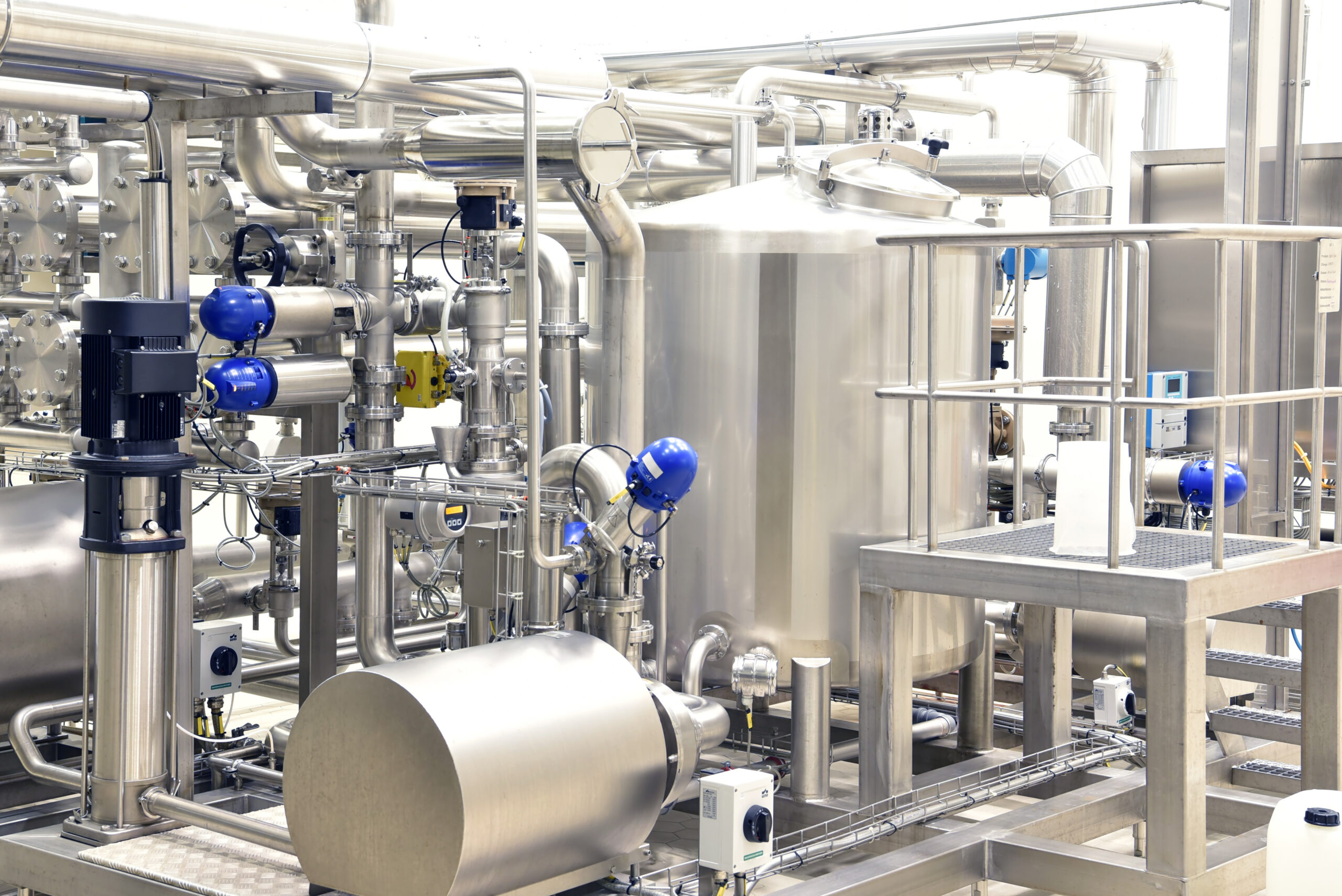
The system integration project included a custom batch management solution and a new process unit in the operating plant, as well as a batch process with CIP (clean in place) and SIP (steam in place) systems.
While the system did not warrant the use of a full-fledged FactoryTalk Batch System due to the limited number of units, a process of “Small Batch Management” was introduced using a combination of built-in software features and a custom state machine AOI. This allowed for a lower cost solution that conformed to the requirements and operated as desired.
A further solution was implemented that would allow operations to input the characteristics of the new recipe from the HMI, giving the ability to dynamically create new recipes. This would save future programming costs when changing products.
In addition, all stakeholders worked together on-site to implement the new hardware and software, overcoming many obstacles for the new process line.

Results
Batch Consistency
The facility transitioned from manual to automated batch reporting. Batch control and tracking were implemented, which improved batch consistency, leading to better quality control, and easily changed products with increased throughput. With the HMI view being the same in the field as it was in the office, information availability increased.
Due to a number of time challenges, effective utilization of Rockwell’s Application Code Manager allowed for bulk configuration, generation, and modification. This allowed the project to remain on schedule and within budget. This also opened the way for future bulk additions and changes whilst still maintaining the modularity of the configuration. With this repeatable and supportable tool, further bulk additions were made for future optimizations and expansions while recognizing time savings in re-engineering.
By automating the system operations, personnel were no longer required to be positioned at the pumps. This improved the safety of personnel at the facility.
Subsequent projects that added new equipment for increased capacity were easily integrated into the new system.
Stay Informed
Read from our blog featuring Hargrove Teammates

What to Expect During a DCS Migration: From Legacy System Review to Startup
By Elliott Miller | Controls & Automation Engineer A distributed control system (DCS) can remain in service for decades. During that [...]

NFPA 70B and the Need for Accurate Equipment Documentation
By Heath Stephens, P.E. | Automation Solutions Director NFPA 70B is a standard published by the National Fire Protection Association (NFPA) [...]

When Control System Modernization Requires a Familiar Operator Experience
By Alan Polk, P.E. | Technical Execution Leader Replacing an obsolete control system creates an opportunity to improve functionality, streamline code, [...]




Subscribe to Our Newsletter
Stay up to date on the latest Hargrove News & Insights.
